


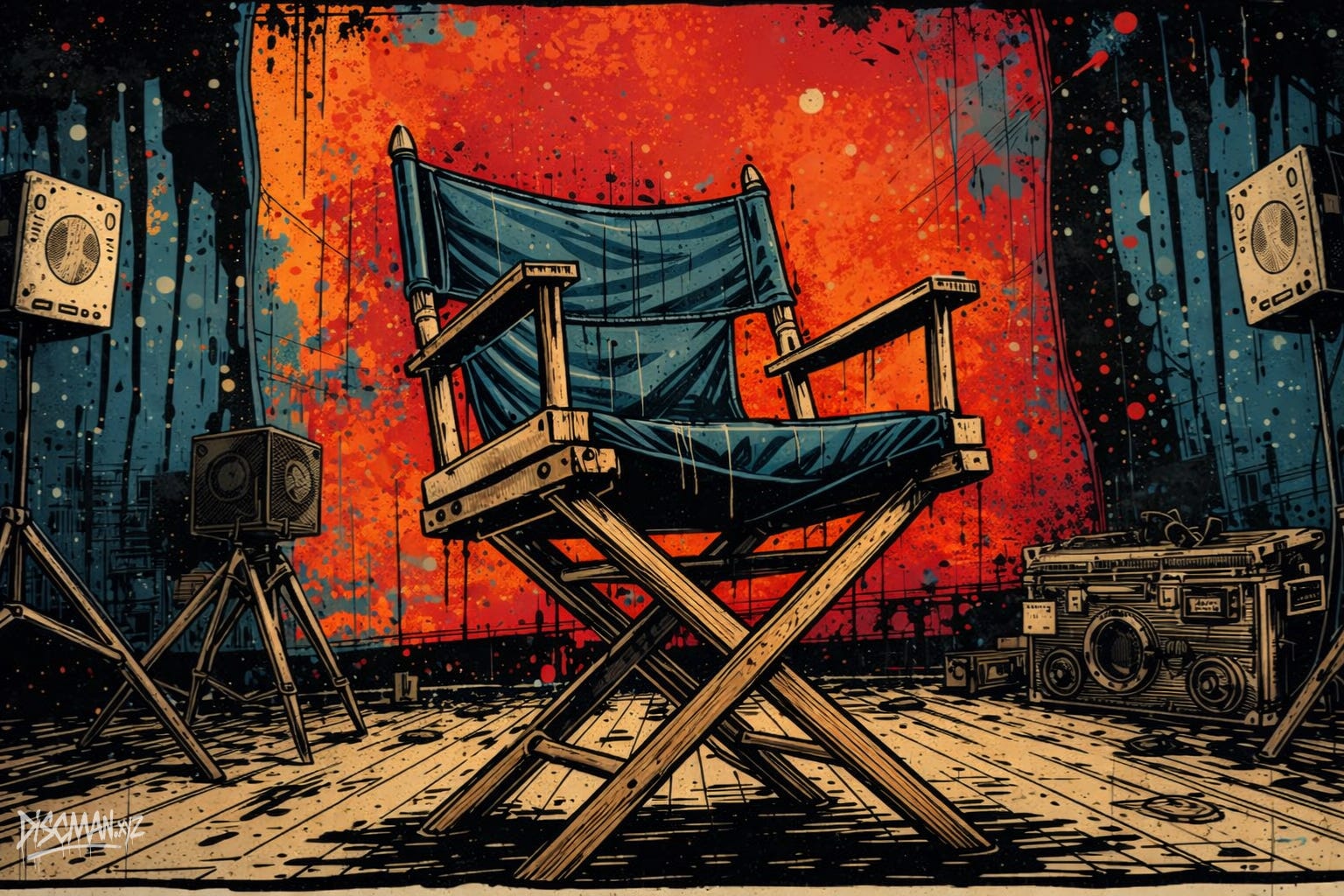
For a long time, artists were defined by their tools.
A guitarist mastered the guitar.
A producer mastered the DAW.
A painter mastered the brush.
A filmmaker mastered the camera.
Creative identity was tied to technical control. The better you operated the instrument, the more capable you were considered as an artist.
But something subtle is changing. The modern creative is beginning to look less like a technician and more like a director.
Directors Don’t Operate Every Tool
On a film set, the director is rarely the person adjusting the camera lens, wiring the lighting rig, or mixing the audio.
That’s not their role.
Their responsibility is something different, and arguably more important.
They hold the vision.
They guide:
the emotional tone
the pacing of the story
the atmosphere of the world
the performances of the actors
the rhythm of the final experience
Every technical decision ultimately serves the director’s interpretation of the idea.
In other words, the director doesn’t operate every tool.
They direct the outcome.
Creativity Moves Toward Directing
A similar shift is happening across creative fields today.
Instead of being limited by the tools they personally operate, artists are increasingly directing ideas into existence with AI.
The question is no longer simply:
“What can I technically make?”
The question becomes:
“What do I want this to feel like?”
Once the feeling is clear, the tools can begin to translate it.
This is why many artists today move fluidly between mediums.
A single idea can travel.
A song might inspire a visual aesthetic.
A visual might inspire a story.
A story might inspire a short film.
Each medium becomes a new way of interpreting the same core vision.
Direction Requires Taste
Of course, directing ideas requires something deeper than tools.
It requires taste.
When artists work across multiple mediums, the unifying thread is not the technology; it’s their aesthetic sensibility.
Taste is what determines:
which idea feels right
which direction feels honest
which version carries emotional weight
which output deserves to exist
Without taste, the creative process becomes noise.
With taste, the process becomes intentional.
This is why great directors are recognizable even when working with different actors, scripts, or locations.
Their perspective holds everything together.
The same is true for modern creatives.
The Real Skill Is Still Human
Some people see these shifts and assume creativity is becoming automated.
But the opposite may be closer to the truth.
When technical barriers fall away, the real differentiators become more visible:
imagination
curiosity
emotional sensitivity
aesthetic judgment
the patience to refine ideas
These qualities can’t be automated.
They come from the inner world of the artist.
And that inner world is what directors (and artists) ultimately bring to life.
The Creative Future
The artists who thrive in the AI era will be the ones who see the clearest vision.
The ones who can sense the emotional shape of an idea before it exists.
The ones who can guide that idea through sound, image, story, and experience until it feels complete.
In other words, the artists who succeed will increasingly resemble directors.
Not because they control every detail.
But because they know what the work is supposed to become.
And they guide the process until it gets there.
In the end, that has always been the heart of art.
Tools change.
Mediums evolve.
But the artist’s role remains the same:
To imagine something meaningful, and bring it into the world.
The Rise of the Multimodal Creative

We’re entering a new era of creativity; one where artists are no longer confined to a single discipline. The walls between music, writing, visual art, design, video, and storytelling are dissolving. Not because everything is blending into sameness, but because creators are finally free to move the way their imagination naturally moves: fluidly, intuitiv…
Discover more at: linktr.ee/DiscmanStudio.
This is something that I write about too.
AI slop can be thought of as creating without a vision, without internal guidance, without a sense of taste.
With technical limitations gone those with vision and a willingness to explore are redefining artistry.
What Kind of Taste?
You published a piece worth reading. The argument: as AI handles the technical execution, the real differentiator becomes taste. The director metaphor. Vision over operation.
Not wrong.
But there's a word in there doing a lot of unexamined work.
Taste.
McDonald's has taste. Billions of people go back. Consistently. Globally. That's not accident — that's taste operating at industrial scale, optimized for zero friction and guaranteed return visits. It works. It satisfies something real.
Paul Bocuse also had taste. Built over decades of cooking the wrong version of things until the right version stopped being a decision and became a physical fact. You don't choose that the sauce is right. It tells you. Usually after it's told you to go fuck yourself a few hundred times first.
These are not the same thing.
And here's why it matters right now: AI is an extraordinary McDonald's accelerant. Pattern recognition at scale. Familiar-but-fresh on demand. If your taste is calibrated to what lands — what scratches the itch people already know they have — generative tools will make you prolific, consistent, and probably successful by every available metric.
Billions served.
The other kind of taste — the kind that knows something is right because it resists easy reproduction — that one was built in friction. In the instrument that fought back. In the failed versions that stayed failed long enough to teach you something. In the years it took before you stopped second-guessing yourself and started second-guessing the work.
That's not nostalgia for suffering. It's structural. Bocuse-level discrimination was forged in exactly the resistance that AI removes.
So yes, taste becomes the differentiator. But the question the piece steps around is the only one worth asking:
What trained yours?
Approval or resistance. What landed or what was right.
Those produce completely different directors. And right now, while everyone's busy becoming one, it might be worth knowing which kind you're turning into.