

The Best AI Creators Aren’t Prompting
They’re directing their imagination

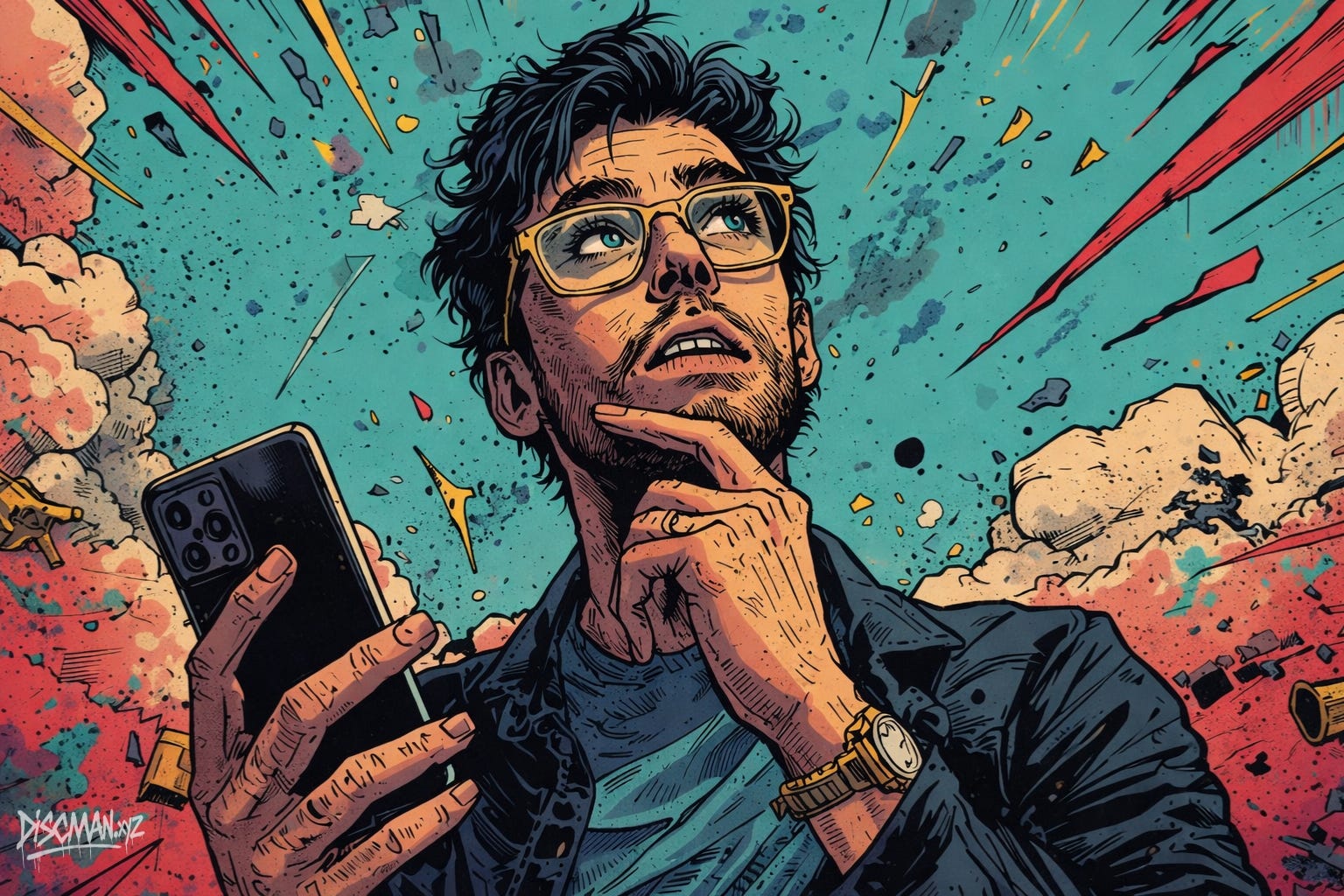
There’s a subtle mistake a lot of creatives make when they use AI:
They think they’re prompting.
Typing inputs.
Testing phrases.
Trying to “get better results.”
Like the goal is to figure out the right combination of words to unlock the machine.
But that framing is too small.
Because what’s actually happening is something much deeper:
You’re not prompting.
You’re translating.
From Feeling → to Form
Every creative work starts the same way:
Not with a tool.
Not with a technique.
With something internal.
A feeling you can’t quite explain.
A sound you can almost hear.
A visual that flashes for a second and disappears.
An idea that doesn’t yet have structure.
That’s the raw material.
And the job of an artist has always been the same:
Translate that into something real.
AI didn’t change that.
It just made the translation faster.
The New Creative Language
What people call “prompting” is actually a new kind of language.
Not technical.
Not mechanical.
Creative.
You’re taking something abstract and turning it into something interpretable:
Inner vision → words → output → refinement → alignment
That’s not engineering.
That’s direction.
That’s composition.
That’s storytelling in a new form.
From User to Director
The shift that changes everything is this:
Stop thinking like someone using a tool.
Start thinking like someone directing a vision.
Because great artists (in any medium) were never defined by what they could physically operate.
They were defined by what they could see.
Directors don’t hold every camera.
Producers don’t play every instrument.
They guide.
They shape.
They decide what feels right and what doesn’t.
And that’s exactly what you’re doing here.
The Real Skill Being Built
When you work this way, you’re not just making things.
You’re building a skill that applies everywhere:
The ability to:
take an idea that doesn’t exist yet
define it clearly
shape it intentionally
refine it until it feels true
That’s not prompting.
That’s artistry.
Say What You Mean
Your imagination is still the source.
Your taste is still the filter.
Your intention is still the guide.
The tool just listens.
So the next time you sit down to “prompt,” ask:
What am I actually trying to say?
What does this feel like?
Because the goal isn’t to get better at prompting.
It’s to get better at expressing.
Discover more at: linktr.ee/DiscmanStudio.
I've found with AI video generators that I must be mindful of my choice of wording in my prompts. If the AI can misinterpret what I tell it, there's a decent chance it will. I seldom get *exactly* what I'm envisioning, but it's usually close--except when it's way out in left field because it interpreted something in my prompt in a way I hadn't expected but can understand once I see what was generated. In these cases, I modify my prompt and try again, and usually can get close to what I want on the second try. Feeding the AI reference material helps a ton, but even that is not foolproof.
Very true. I have read how people are having to train themselves to talk like programmers to AIs. I just talk to ChatGPT like a person. I have a paid account and it remembers our past conversations. Sometimes I might have to remind it of a past thread, but once it does that, it’s just like talking a person. It’s a very polite person, too!
When I’m writing a book, I’m working with it just like we’re a writing team. My prompts are really just long conversations where I dump out all my ideas about how a scene should go, the character motivations, the setting, how it advances the story toward the end goal, etc. I just treat it like a person and I get fantastic results.
One thing I’ve noticed is that, after some threads get pretty long, performance starts to bog down. I ask it to save the discussion and then, when I open the next thread, I have it link back to the previous ones. Now, having worked on several books together, we have a deep working relationship and it recalls almost everything.
Someone said that AI becomes a mirror image of you. I don’t think that’s the case, but it definitely has adapted to my way of working and it has become an integral part of the creative process. It makes creative work all that more enjoyable.